
If you've ever wondered how to make hard boiled eggs in boiling water, you're in the right place. This simple, foolproof method produces perfectly cooked eggs with firm, creamy yolks and shells that peel easily every time.
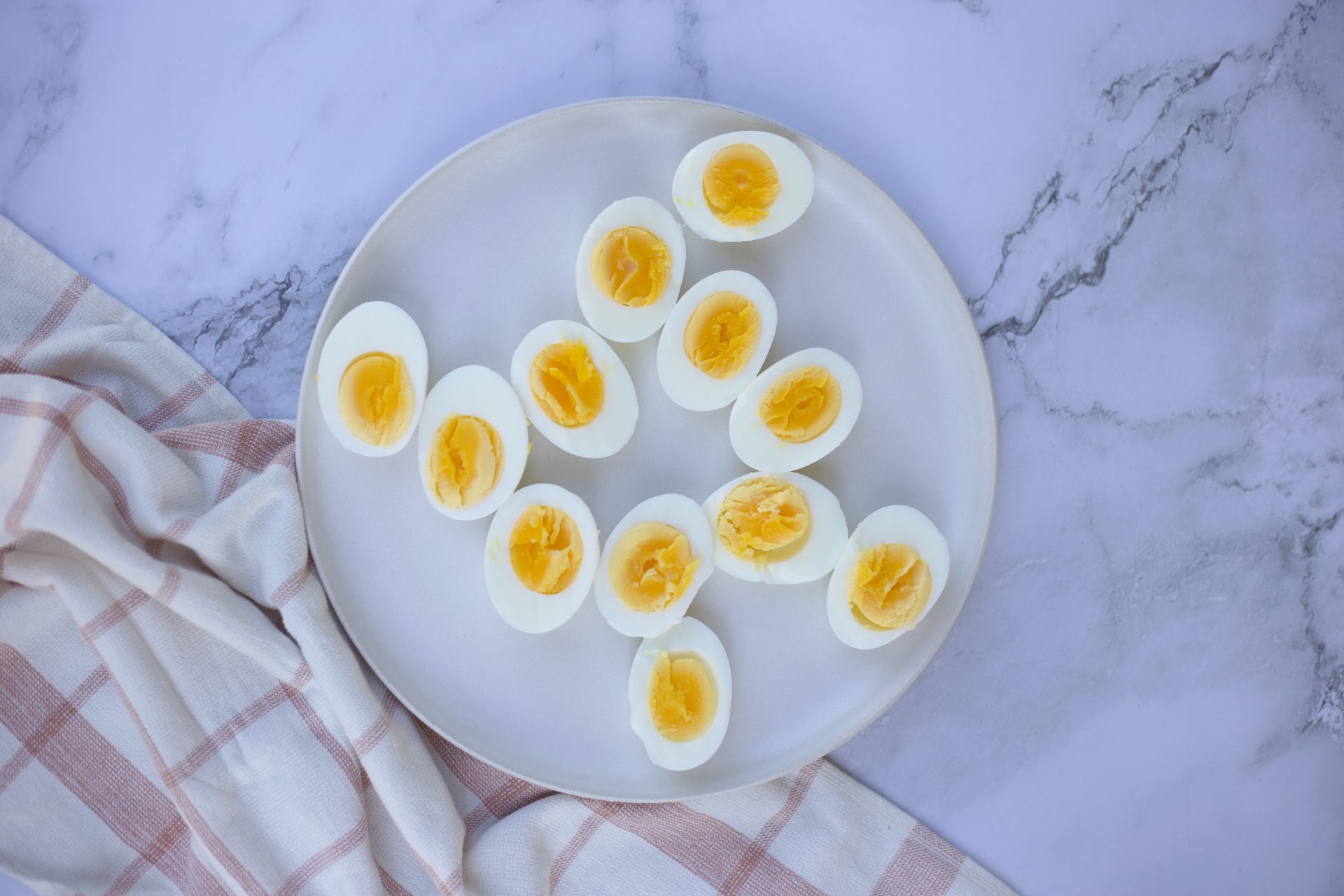
How to Make Hard Boiled Eggs in Boiling Water
Whether you're meal prepping for the week, making egg salad, adding protein to salads, or enjoying them as a quick breakfast or snack, hard boiled eggs are a nutritious staple to have on hand. With just a few ingredients and about 20 minutes from start to finish, you'll have perfectly cooked eggs ready to enjoy however you like.
Follow the step-by-step instructions below, along with my cooking tips and timing guide, to make perfect hard boiled eggs every time.
Why start eggs in boiling water?
Starting eggs in boiling water is my preferred method because it's simple, reliable, and produces consistent results every time. Since the water is already at the right temperature, the cooking time begins as soon as the eggs are added, making it easier to achieve perfectly cooked yolks without guessing.
Many people also find that eggs started in boiling water are easier to peel, especially after they're cooled in cold water. While egg freshness can still affect how easily the shells come off, this method often helps the shell separate more cleanly.
Just be sure to lower the eggs gently into the boiling water with a spoon to prevent cracking, then cool them in cold water before peeling for the best results.
Ingredients
- 6 large or extra large eggs
- 3 cups water or enough to cover eggs
- 3 cups cold water (for cooling)
- Ice (optional)
Equipment
- Small pot or saucepan with lid
- Slotted spoon
- Timer
Steps to Make Hard Boiled Eggs in Boiling Water
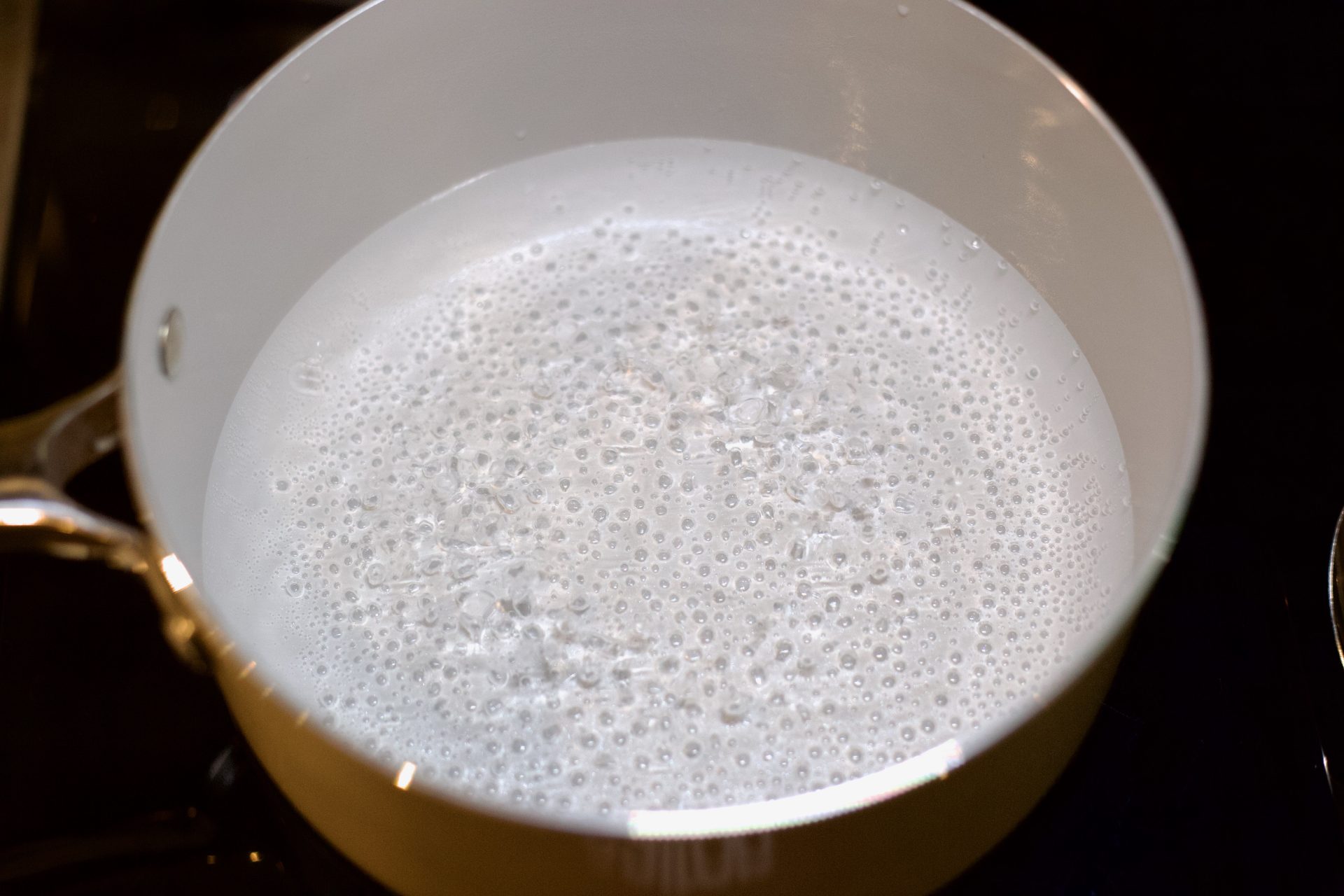
1. Add about 3 cups of water to a small saucepan with a lid. Place the pot on the stovetop and bring the water to a boil over high heat.
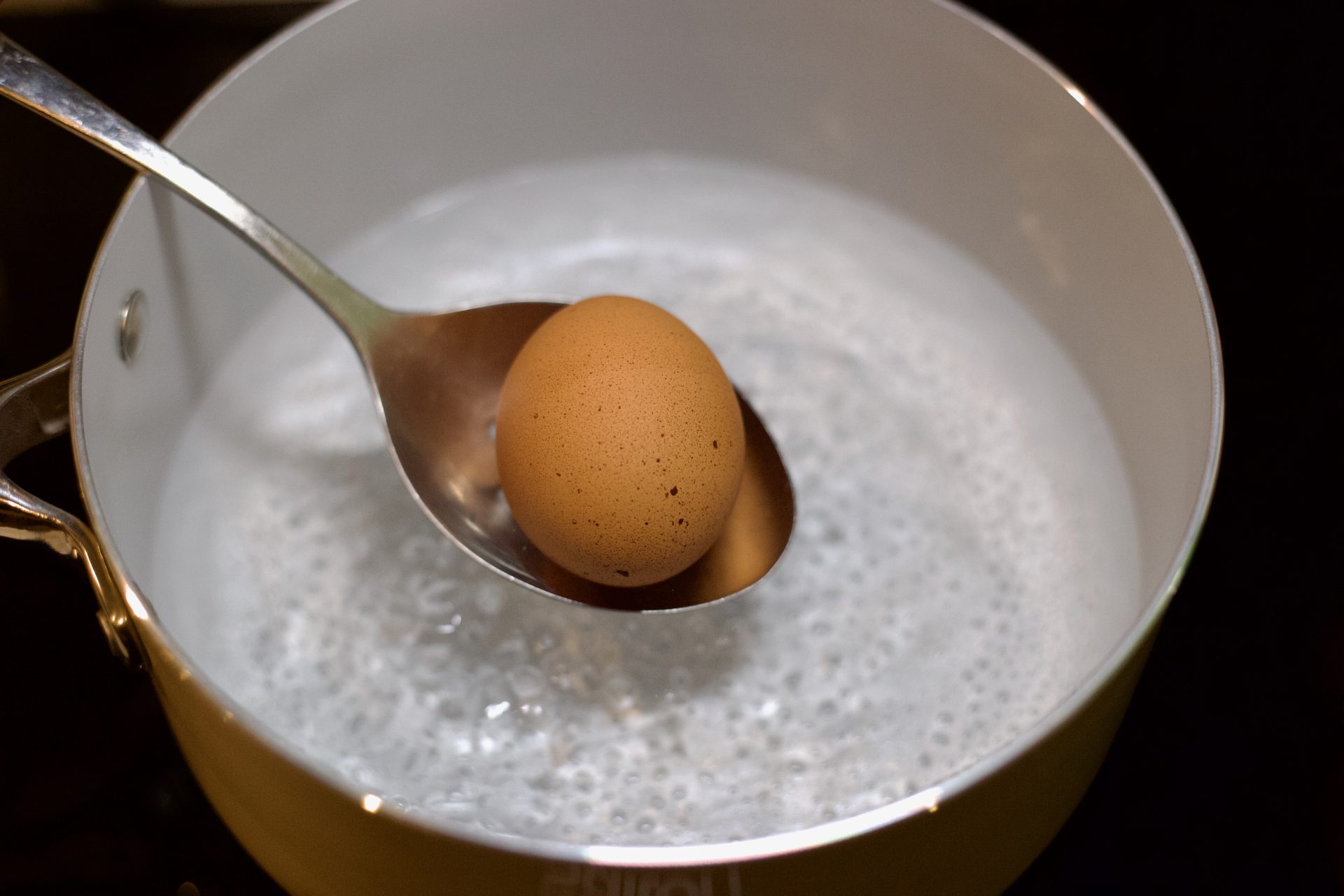
2. Once the water is boiling, carefully remove the lid and gently add the eggs one at a time using a spoon. Lower each egg slowly into the water to prevent it from cracking.
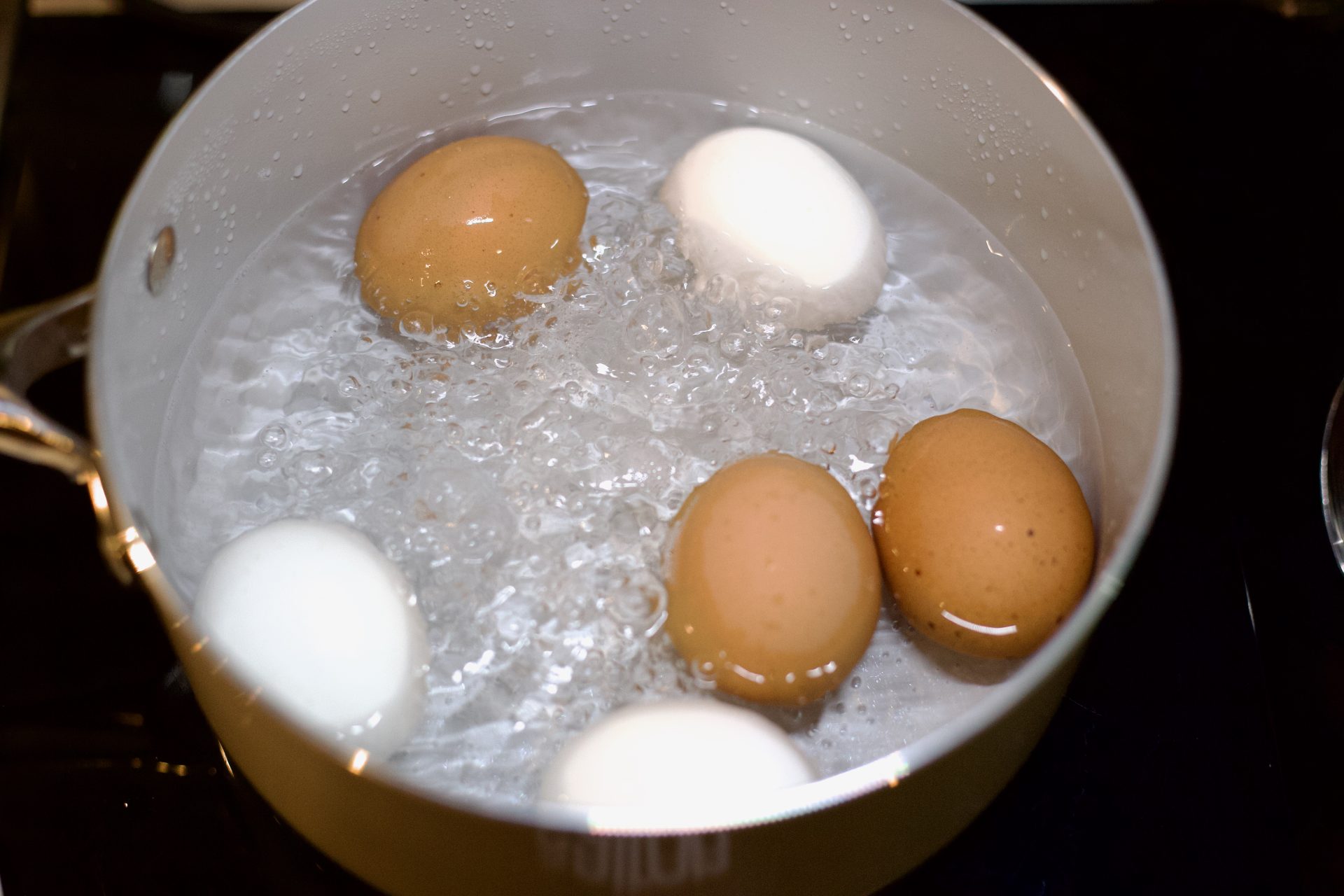
3. Replace the lid and reduce the heat to medium-high. Set a timer according to your desired yolk doneness using the Egg Boiling Time Chart below (10 minutes for the method shown).
4. When the timer goes off, remove the pot from the heat. Carefully remove the lid and drain the hot water from the pot.
5. Fill the pot with cold running water until the eggs are completely covered. Allow the eggs to cool for about 5 minutes, replacing the water if needed until the eggs are cool to the touch. For faster cooling, add a handful of ice cubes to the water (optional).
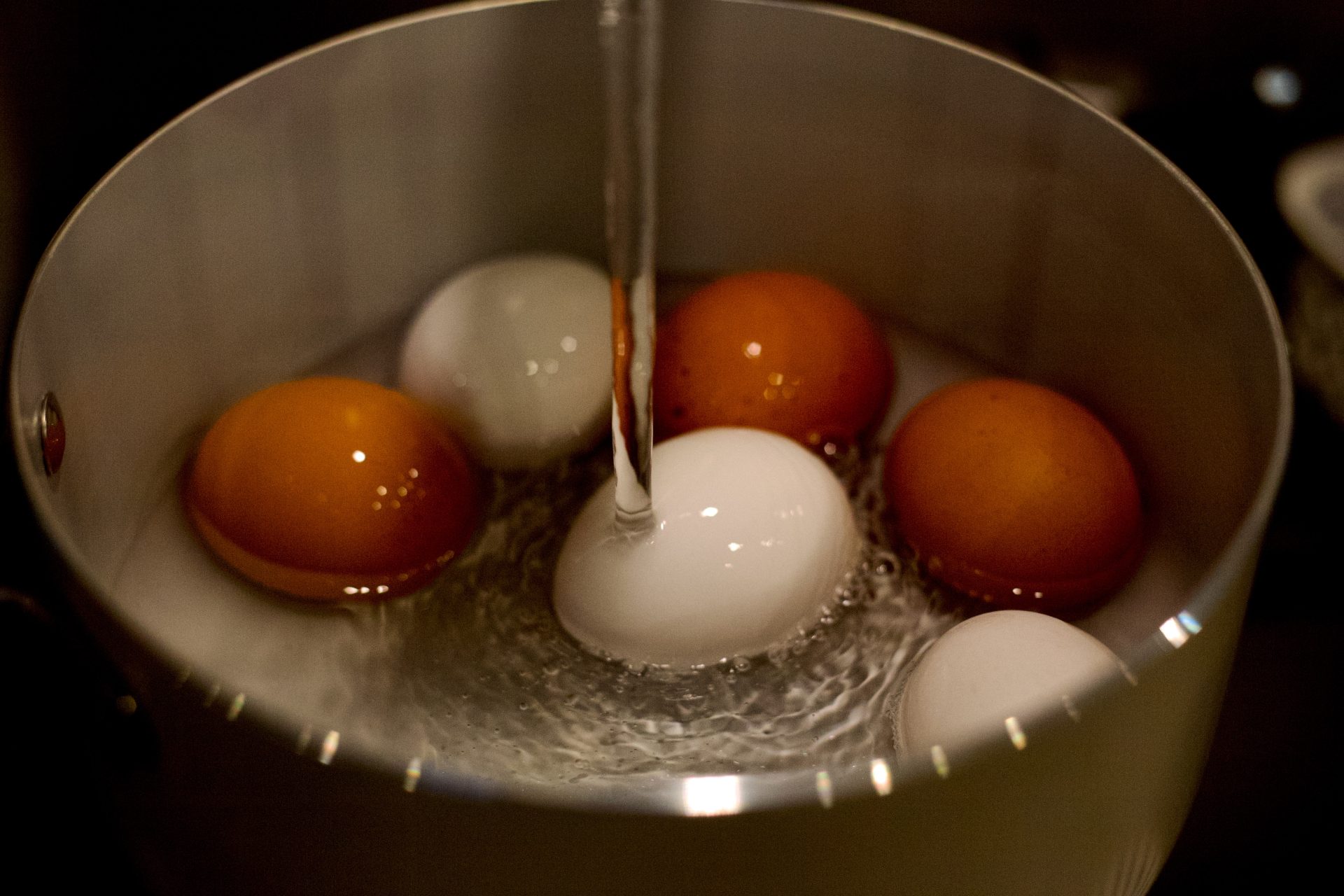
6. Once cooled, remove the eggs one at a time from the water and gently peel the shells. Return the peeled eggs to the water as you finish peeling each one to help remove any remaining shell pieces.
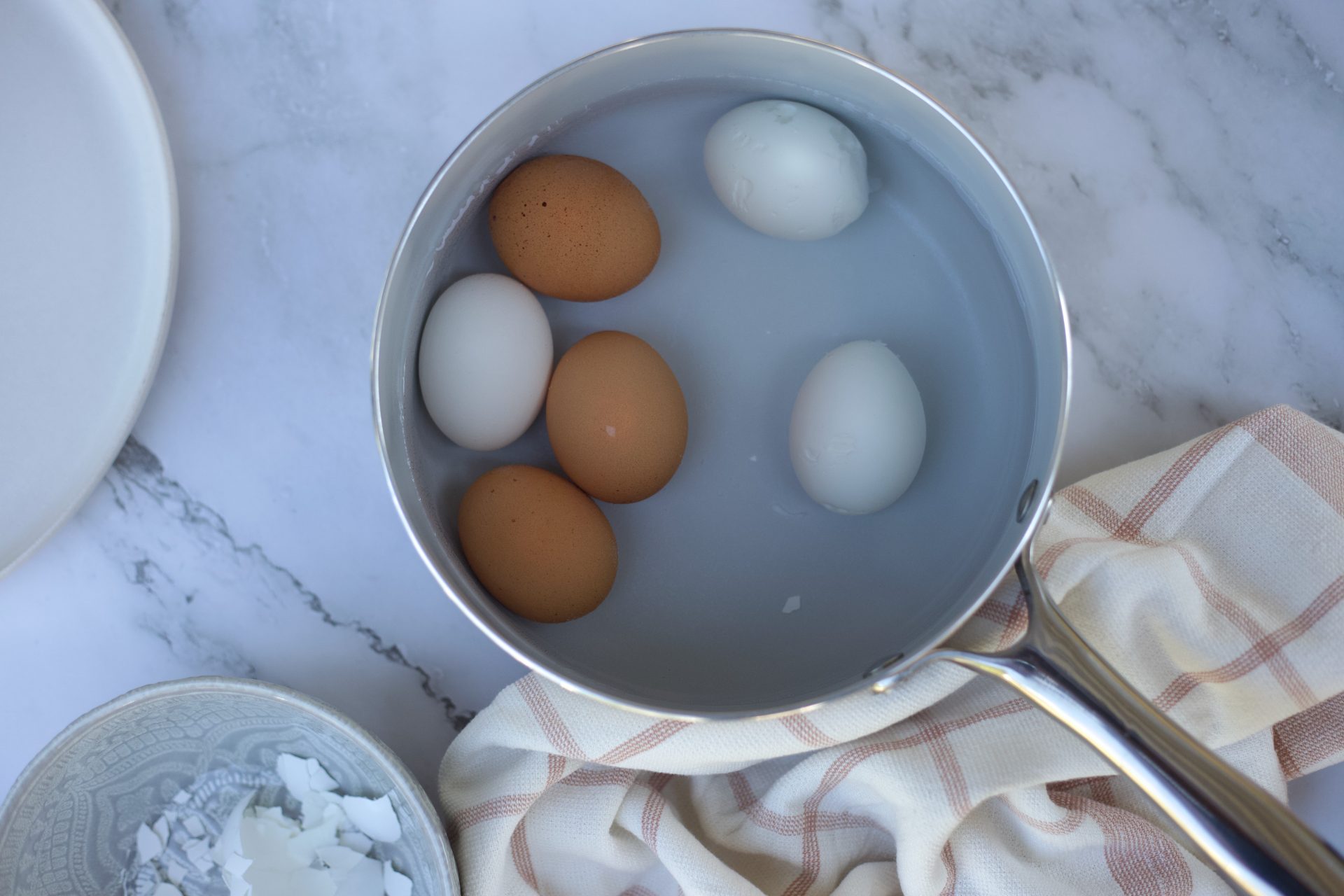
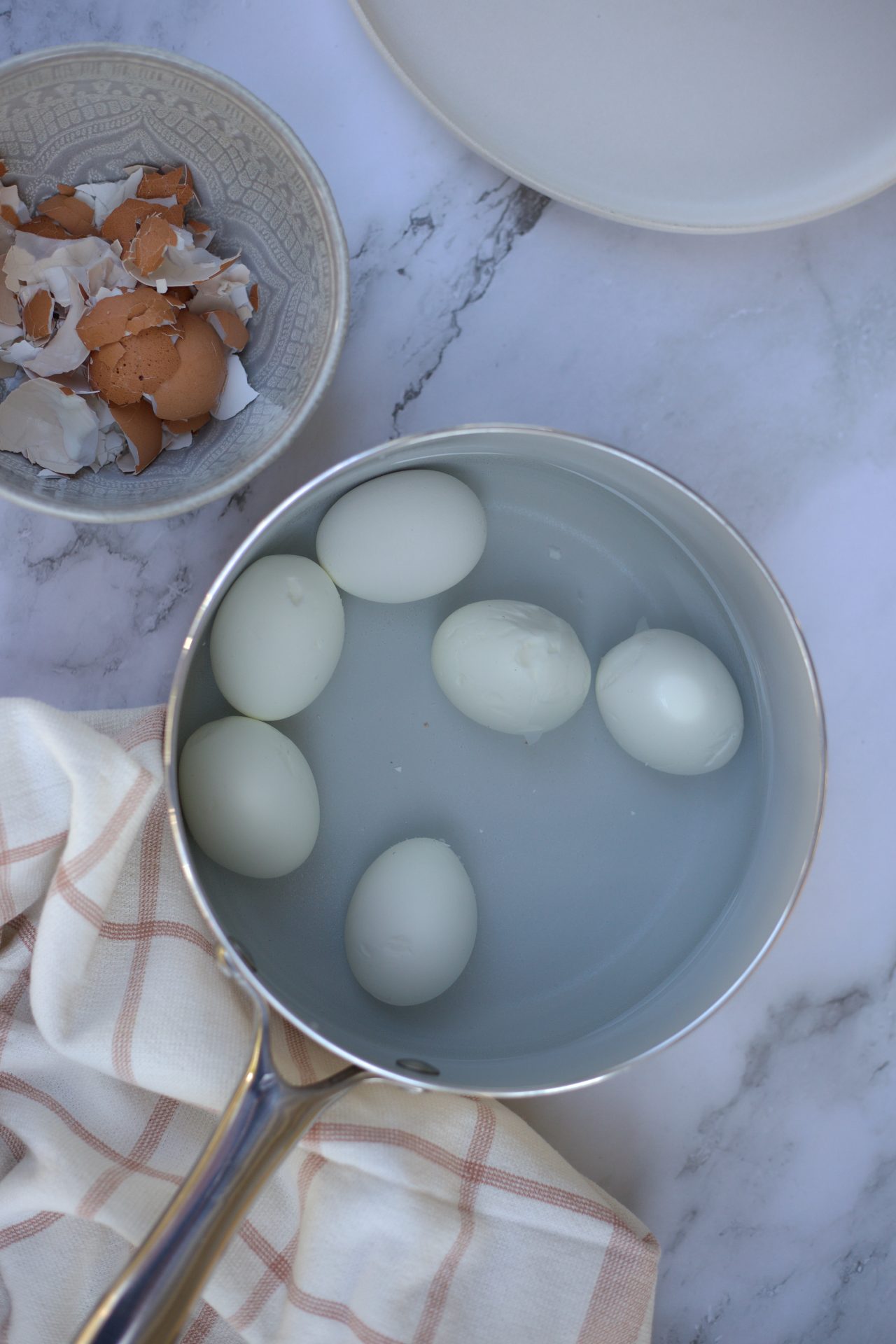
7. Once all eggs are peeled, remove them from the water and pat dry. Serve whole, slice in half, or use in your favorite recipes such as egg salad sandwiches, potato salad, salads, or snacks.
Egg Boiling Time Chart
TIME | RESULT |
|---|---|
6 min | jammy |
7 min | soft |
8 min | medium |
9 min | mostly firm |
10 min | slightly creamy |
11 min | classic hard boiled |
12 min | firm |
13 min | very firm |
Tips for Perfect Hard Boiled Eggs
Follow these simple tips for perfectly cooked, easy-to-peel hard boiled eggs every time:
- Don't overcrowd the pan. Arrange the eggs in a single layer so they cook evenly and are less likely to crack.
- Start with boiling water. Adding the eggs to already boiling water helps create consistent cooking times and makes it easier to achieve your preferred yolk texture.
- Lower the eggs in gently. Use a slotted spoon or large spoon to carefully lower each egg into the boiling water to help prevent the shells from cracking.
- Use a timer. Even an extra minute or two can change the texture of the yolk. Set a timer as soon as the eggs go into the water for the most consistent results.
- Cool the eggs quickly. Transfer the eggs to cold water after cooking to stop the cooking process. For even faster cooling, add a handful of ice cubes to the water.
- Peel under running water. If the shells are stubborn, peel the eggs under cool running water. The water helps loosen the shell and rinse away small pieces as you peel.
How to Peel Hard Boiled Eggs Easily
For easy-to-peel hard boiled eggs, cool them in cold water or an ice bath immediately after cooking to help stop the cooking process and make the shell easier to remove. When you're ready to peel, gently tap the egg on a hard surface and roll it to crack the shell all over. Start peeling from the wider end where there is usually a small air pocket.
If the shell is stubborn, peel the egg under cool running water to help loosen the pieces. Slightly older eggs also tend to peel more easily than very fresh eggs because the egg white separates from the shell more readily.
How to Store Hard Boiled Eggs
Hard boiled eggs are a great make-ahead option for quick breakfasts, snacks, and meal prep. Store cooked eggs in the refrigerator within two hours of cooking to help keep them fresh.
- Unpeeled hard boiled eggs: Store in a covered container in the refrigerator for up to 1 week. Keeping the shell on helps protect the egg and maintain freshness.
- Peeled hard boiled eggs: Store peeled eggs in an airtight container in the refrigerator and use within a few days. Add a damp paper towel to the container to help prevent the eggs from drying out.
- Meal prep: Prepare a batch of hard boiled eggs at the beginning of the week for an easy protein option to add to breakfasts, snacks, salads, and lunches.
Common Mistakes When Making Hard Boiled Eggs
Hard boiled eggs are simple to make, but a few small mistakes can affect the texture, peeling, and overall results. Avoid these common mistakes for perfectly cooked eggs every time:
- Dropping the eggs into the water: Dropping cold eggs into boiling water can cause them to crack. Lower them gently with a spoon to protect the shells.
- Boiling the eggs too aggressively: A rapid, hard boil can cause eggs to bounce around and crack. Keep the water at a gentle boil after adding the eggs.
- Forgetting the timer: Even a few extra minutes can change the texture of your eggs. Set a timer as soon as the eggs go into the boiling water for consistent results.
- Not using enough water: Eggs should be fully covered with water while cooking so they heat evenly.
- Forgetting the timer: Even a few extra minutes can change the texture of your eggs. Set a timer as soon as the eggs go into the boiling water for consistent results.
- Not using enough water: Eggs should be fully covered with water while cooking so they heat evenly.
Frequently Asked Questions
Boil eggs in already boiling water for about 10 minutes for firm, fully cooked yolks. If you prefer a softer or creamier center, reduce the cooking time by a minute or two. Once cooked, transfer the eggs to cold water to stop the cooking process.
For this method, add the eggs after the water reaches a rolling boil. Carefully lower them into the water one at a time with a spoon to prevent cracking. Starting with boiling water helps create more consistent cooking times and can make the eggs easier to peel.
The key is to start with boiling water, use a timer, and cool the eggs immediately in cold water after cooking. Gently lowering the eggs into the pot also helps prevent cracks, while avoiding overcooking keeps the yolks bright yellow and tender.
Yes! Cold eggs can go straight from the refrigerator into boiling water. Just lower them in gently with a spoon to reduce the chance of cracking. There's no need to let them come to room temperature first.
Cold eggs can crack if they're dropped into boiling water too quickly because of the sudden temperature change. To help prevent this, gently lower each egg into the water with a spoon instead of dropping it in.
Cool hard boiled eggs in cold water for about 5 minutes, or until they're comfortable to handle. Once cooled, dry them and refrigerate them promptly. This helps stop the cooking process and keeps them fresh.
Gently tap the egg on the counter to crack the shell, then roll it lightly to loosen the shell. Peel under cool running water if needed, starting from the wider end where the air pocket is located. The running water helps lift away stubborn shell pieces.
The 5-5-5 method is a popular way to cook hard boiled eggs in an Instant Pot, not on the stovetop. It means pressure cooking the eggs for 5 minutes, letting the pressure release naturally for 5 minutes, then placing the eggs in an ice bath for 5 minutes before peeling.
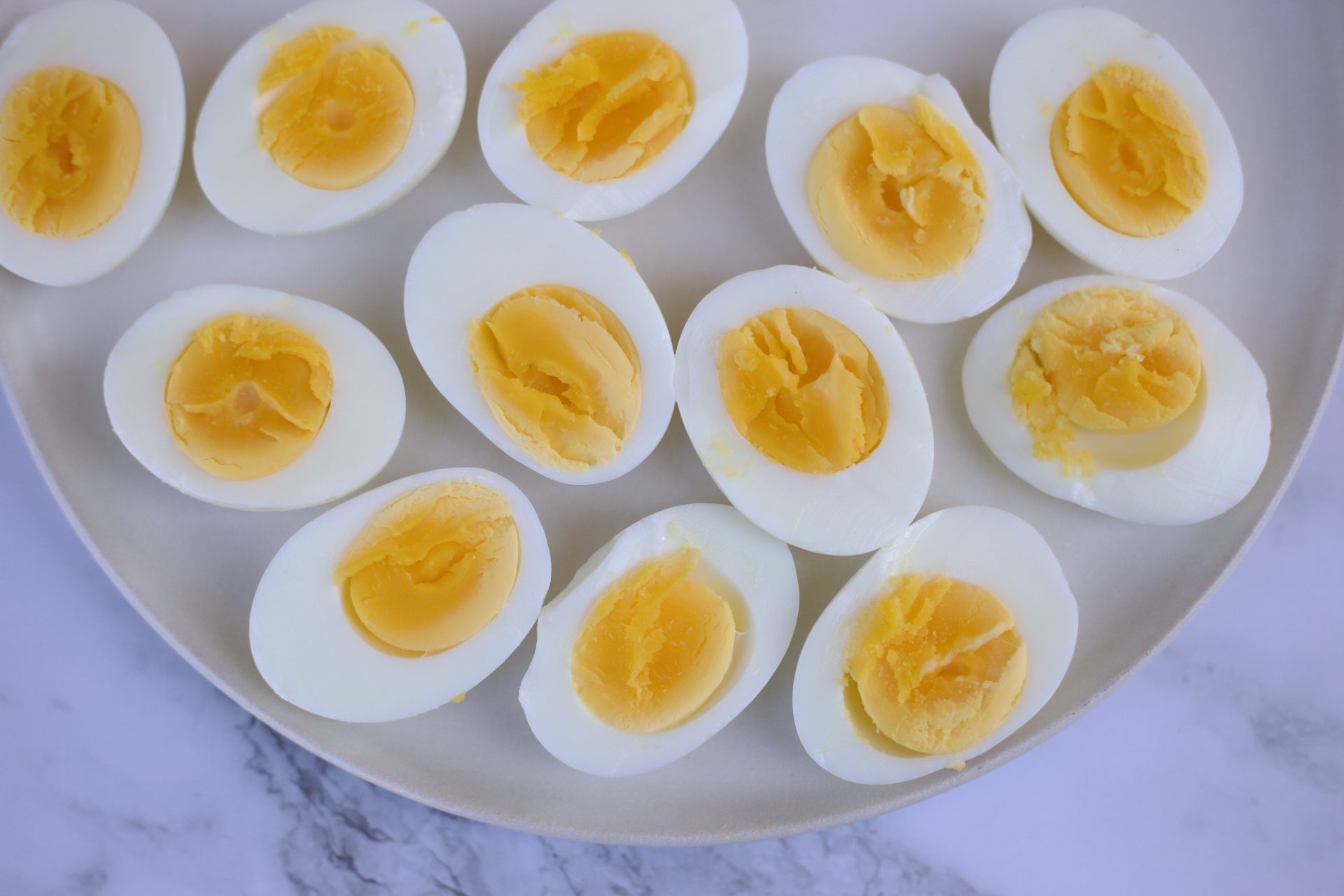
Hard Boiled Eggs
Equipment
- 1 small pot or saucepan with lid
- 1 Slotted spoon
- 1 Timer
Ingredients
- 6 large or extra large eggs
- 3 cups water or enough to cover eggs
- 3 cups cold water (for cooling)
Instructions
- Add about 3 cups of water to a small saucepan with a lid. Place the pot on the stovetop and bring the water to a boil over high heat.
- Once the water is boiling, carefully remove the lid and gently add the eggs one at a time using a spoon. Lower each egg slowly into the water to prevent it from cracking.
- Replace the lid and reduce the heat to medium-high. Set a timer according to your desired yolk doneness using the Egg Boiling Time Chart (10 minutes for the method shown).
- When the timer goes off, remove the pot from the heat. Carefully remove the lid and drain the hot water from the pot.
- Fill the pot with cold running water until the eggs are completely covered. Allow the eggs to cool for about 5 minutes, replacing the water if needed until the eggs are cool to the touch. For faster cooling, add a handful of ice cubes to the water (optional).
- Once cooled, remove the eggs one at a time from the water and gently peel the shells. Return the peeled eggs to the water as you finish peeling each one to help remove any remaining shell pieces.
- Once all eggs are peeled, remove them from the water and pat dry. Serve whole, slice in half, or use in your favorite recipes such as egg salad sandwiches, potato salad, salads, or snacks.
Nutrition information is estimated and does not adhere to U.S. FDA NLEA guidelines.